
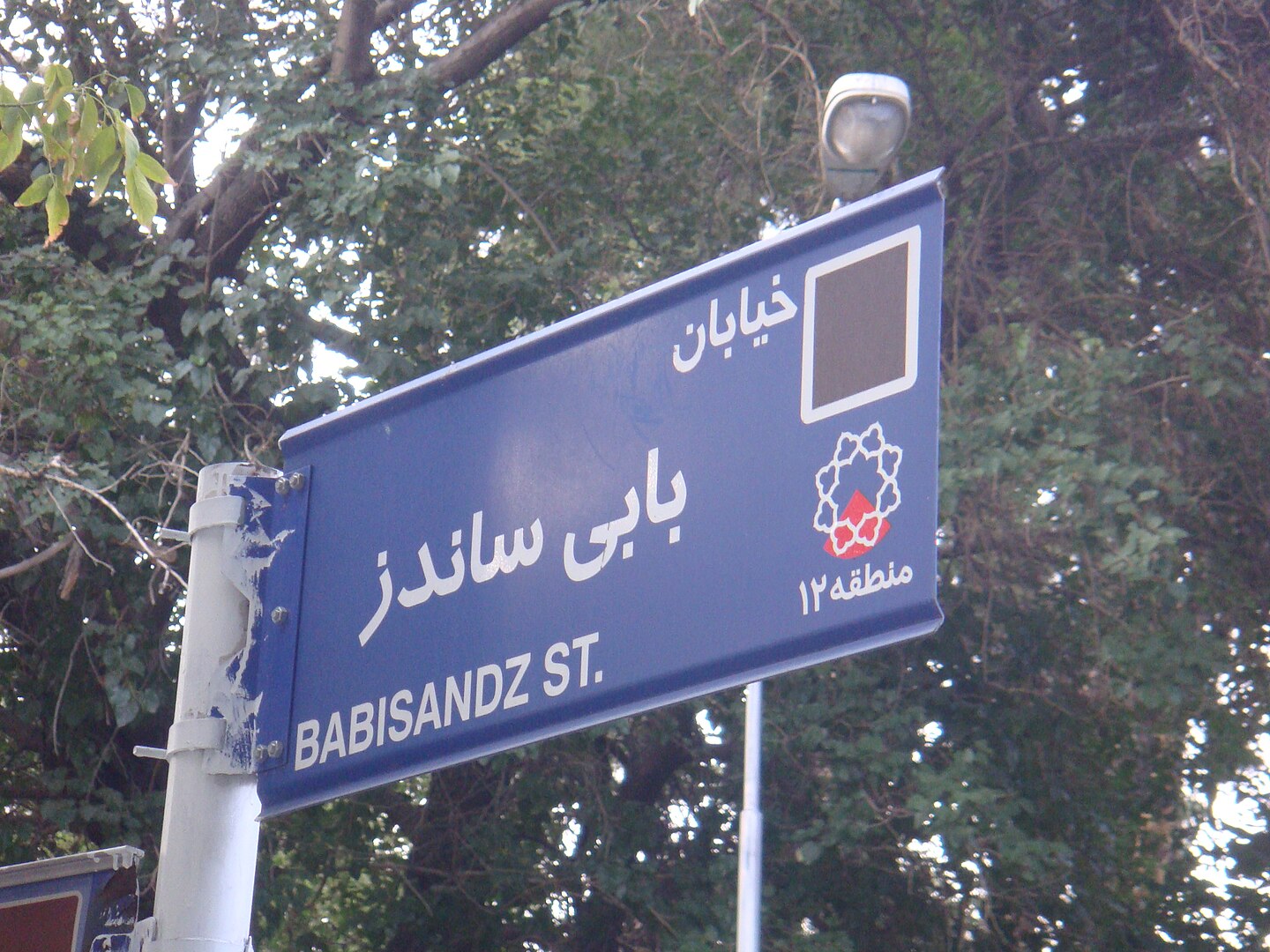
He died for what he believed in, a united and free Ireland. More than 4 decades later, his story and death are used in a struggle on the other side of the globe. Should the dead not be left to rest? Or do we need their impact and blessings more than ever? While philosophers are probably very busy figuring this one out, let us take a closer look at the very non-metaphysical resurrection of Bobby Sands.
DOI: 10.17613/adw0-wd67
The Entrance of the Teheran Embassy
May 5th, 1981: At 01:17 in the morning, in a high security prison about 90 miles north of Dublin, a 27-year-old man dies after refusing food for 66 days. The man, a member of the Irish Republican Army, sentenced to 14 years in prison for the unlawful possession of a gun, dies a slow and agonizing death, his body slowly shutting down, leaving him unable to see or even drink water in the end.
Immediately after his death, he would become an icon of Irish Republicanism and, similar to Che Guevara, inspire both political change and kitschy souvenirs. His name was Robert Gerard Sands, but everyone called him Bobby.
What made Sands’ case stand out from previous (and subsequent) Republican hunger strikes was that while he was imprisoned, he ran for election to be a Westminster MP (member of parliament). Republican leadership thought it a great move to put his name up for the representative of Fermanagh and South Tyrone, an area Sands had no affiliation with at all. It just so happened that the previous MP passed away suddenly, and elections had to be held. Sands won by a 1% margin against his unionist opponent and backed by that fact, the narrative went from ‘IRA hunger strikers demand special status’ to ‘Margaret Thatcher lets elected MP starve in prison’. This brought the case into the international spotlight. It also started a process of change in Republican tactics: By focusing more on democratic, legal legitimation – having elected, full-time politicians fight for their cause – they wanted to achieve more backing, both at home and abroad. They did not abandon their armed struggle, but this shift in focus was never seen before and one might see this as the necessary starting point to the 1998 peace agreement.
Later the same month, 1981: In Teheran, the street featuring the entrance to the British Embassy is renamed Bobby Sands Street in honor of the Irish Republican. Originally done so in a nightly bout of activism, the name stuck with the locals and the embassy made their side entrance the main one, in order to not carry Sands’ name as their official address. Links between the Northern Irish man and the struggle against British colonialism and to frame the hunger strikes conducted by Iranian prisoners of the opposition were all amalgamated in this renaming of what used to be Winston Churchill Boulevard.
From Belfast to Gaza
May 5th, 2021: Given that Sands was Roman Catholic, we can assume that he now, 40 years after his death, rests in a better place in accordance with his faith, his graveside at Milltown Cemetery in Belfast is well cared for by the National Graves Association and the legend around the young (IRA) volunteer who paid the ultimate sacrifice for Irish Freedom lives on in the Republican self-image and in their presentation to the outside world.
Nothing to see here, right? All is well 40 years on! Also, Sinn Fein, the party that Sands was organized in, sells all kinds of merchandise, from the poems he wrote in prison[1] to shirts with his face next to the one of Che Guevara. And don’t get me started on the plethora of songs about both Sands as a person and the 1981 hunger strike in general, which was also the event that led to the formation of many of the bands that are the backbone of the Irish Republican music scene today.
2024: The Gaza-Palestine-conflict has reached new, horrifying heights after a rocket attack on Israel by Hamas on the 7th of October the previous year and subsequent counterattacks, leaving countless civilians dead, injured or displaced. This leads to waves of solidarity for both sides – I will refrain from taking sides at this point, as that is not the purpose of this article.
May 2nd 2023: The Bobby Sands Trust, an organization based in Belfast which was, according to its homepage ‘established to publish, promote and keep in print the extraordinary writings of Bobby Sands, who from prison isolation became an international figure in 1981, and who to this day continues to inspire Irish Republicans in their pursuit of freedom from British rule’, offered condolences after the death of Palestinian hunger striker Khader Adnan.
Like Sands, Adnan had refused medical care in the end stages of his life; he died in an Israeli prison after 87 days on hunger strike. Sinn Fein chairperson Declan Kearney invoked the ghost of Sands when traveling to South Africa to discuss the Gaza situation with officials there and made use of what Sands is surprisingly well known for: His poems. He recited the poem ‘The Rhythm of Time’ [2], written by Sands during his imprisonment, in order to highlight the rightfulness of both the Northern Irish and Palestinian struggle for independence from Britain and Israel, respectively.
Everybody Hates the Brits
But why pick Sands? Since his death, many more men and women all over the world went on hunger strike, some with the same lethal consequences as him and yet, parallels are continuously made between today’s Gaza Strip and the West Belfast of the 1980s.
A first, more logical, albeit shortened explanation lies in the common enemy of both Palestinians and (Northern) Irish: The British empire. Israel, surrounded by Arab nations, bears similarities to Northern Ireland in a demographic sense, as the latter is an Anglican enclave on an otherwise catholic Island. Both were supported by the British in order to have strategically beneficial places in place in regions they wanted to control. The 1917 Balfour Declaration, in which the British Empire officially supported building a ‘national home’ for the Jewish people in Palestine, is named after the then Minister of Foreign Affairs, Arthur James Balfour, who initiated a stricter police law in 1887, which mainly targeted Irish Republican activists on the British Isles.
The police brutality against Irish Republicans happening while he was Chief Secretary for Ireland earned him the nickname ‘Bloody Balfour’. He only held this position for 4 years (1887-91) though, before moving up the political ladder. The British state – and the British empire before that – dividing up land that is already inhabited and supporting the settlement of outsiders there seems to be the common denominator for the Irish identification with the Palestinian cause.
Another one, which would be more pressing in the northern Irish context, is the matter of religion: Ulster protestants do identify strongly with the reading of the bible that says that they are the chosen people. Just like the notion of a ‘protestant state for a protestant people’, unionists do understand the notion of a Jewish state for Jewish people and the bible that states that the Israelis are God’s Chosen People. This of course does not translate to all unionists supporting Israel’s current actions in Gaza, but it can explain historical connections.
A Secret Language in Bheirlín
According to the German newspaper Neues Deutschland (nd), pro-Palestine activists were forbidden to speak Irish at a protest camp in Berlin in April 2024, as the police only permitted the usage of German and English [4]. Using Irish as a sort of ‘secret language’ that is not understood by police or prison guards is a tactic used way before current events or even Sands’ time, but he brings it up in his prison diary, offering the following explanation:
“The screws didn’t like Gaelic being shouted about the wings or its use in conversations. It alienated them, made them feel foreign or even embarrassed them. They didn’t know what was being said. They suspected that every word was about them and they weren’t far too wrong!” [3, Sands 1983]
Irish is an official EU language today, yet it is so seldomly spoken – and certainly unknown to Berlin police – that when it comes to ‘secret languages’, it is indeed a smart choice. Yet, again, the same would have been true for Maltese or Latvian, but it was an Irish language group that showed solidarity at the protest camp. Part of the group’s official press statement reads:
“We as Irish people are all too familiar with having our language oppressed. This understanding motivated us to express solidarity at the Bundestag protest camp, a place where languages are unjustly repressed and prohibited by an omnipresent and aggressive police force, which has repeatedly intruded into the camp since its beginning, detaining and violently assaulting peaceful protesters.”[5]

Apples and Oranges
Am I trying to argue that solidarity based on shared experience of oppression is wrong? Not at all! I just want to ask for caution, as creating a bubbling, unrecognizable melting pot of historical and political analogies can happen faster than one realizes, even when the underlying intentions are good. The Peace Walls that divide Belfast are in no way comparable to the Gaza Wall, the UN mandate of Israel is a completely different legal and historical construct from the English settlers that came to what is now Northern Ireland in the 1600s. The suffering of the people can be compared on a humanitarian and compassionate level, from displacement to killings to hunger strikes, but both struggles are too deeply rooted in their individual context to be equated without any further explanation or differentiation.
Meanwhile, in Thailand, Netiporn “Bung” Sanesangkho, an activist fighting against the laws regarding offense against a sovereign, died on the 14th of May 2024 after her second hunger strike, the first one lasted 64 days. She was 28 years old. The method of peaceful but possibly lethal protest is still being used by prisoners and activists every single day, all over the world. Bobby Sands would have been proud.
Further Reading
- O’Hearn, Denis. Bobby Sands : Nothing but an Unfinished Song. 2nd ed. London : PlutoPress, 2016.
- English, Richard. Armed Struggle : the History of the IRA. Oxford [u.a.]: Oxford Univ. Press, 2003.
References
[1] This is in no way meant to diminish Sands’ work or legacy, it just shows that there is a market for things like this, both on the seller and the buyer side. I was also not able to determine who actually owns the rights to the most famous picture of Sands, which in itself is cropped from a group photo.
[2] „‘October 7 Is Watershed Moment’ – Sinn Fein Leader Slams Hypocrisy of Western Powers (VIDEO)“. Palestine Chronicle (blog), 16. Mai 2024. https://www.palestinechronicle.com/october-7-is-watershed-moment-sinn-fein-leader-slams-hypocrisy-of-western-powers-video/.
[3] Sands, Bobby: One Day In My Life, p. 35, Mercier Press 1983. [4] Flakin, Nathaniel. „Gaeilge: Gefährliche Sprachverbote bei Pro-Palästina Camp“. nd-aktuell.de. Zugegriffen 19. Juni 2024. https://www.nd-aktuell.de/artikel/1181748.irisch-gaeilge-gefaehrliche-sprachverbote-bei-pro-palaestina-camp.html.
[5] Google Docs. „Statement on the Ciorcal Comhrá Bheirlín incident / Ráiteas ar eachtra an Chiorcail Chomhrá Bheirlín“. Zugegriffen 19. Juni 2024. https://docs.google.com/document/d/1y7oeRfOK2SPGhtd-J0XC1V3jXHcplWMInhXTnbuxa9o/edit?pli=1&usp=embed_facebook.
Author
Sarah Ritt has received her MA in English from the University of Vienna, her thesis is entitled “Power, Public Space and the Issue of Murals in Post civil war Belfast.” At the moment, she is pursuing her PhD in Public History at the University of Vienna, where she investigates and contextualises contemporary identity building practices in Northern Ireland. Her most recent publication is part of the 2021 Peter Lang volume Booze as a Muse: Literary and Cultural Studies of Drink and deals with the ritualistic alcohol consumption of modernist author Brendan Behan.
Credentials for the featured image: Orijentolog – Own work, CC BY 4.0, https://commons.wikimedia.org/w/index.php?curid=142206262
Publication date: 2024/06/19
Leave a Reply